Decision point
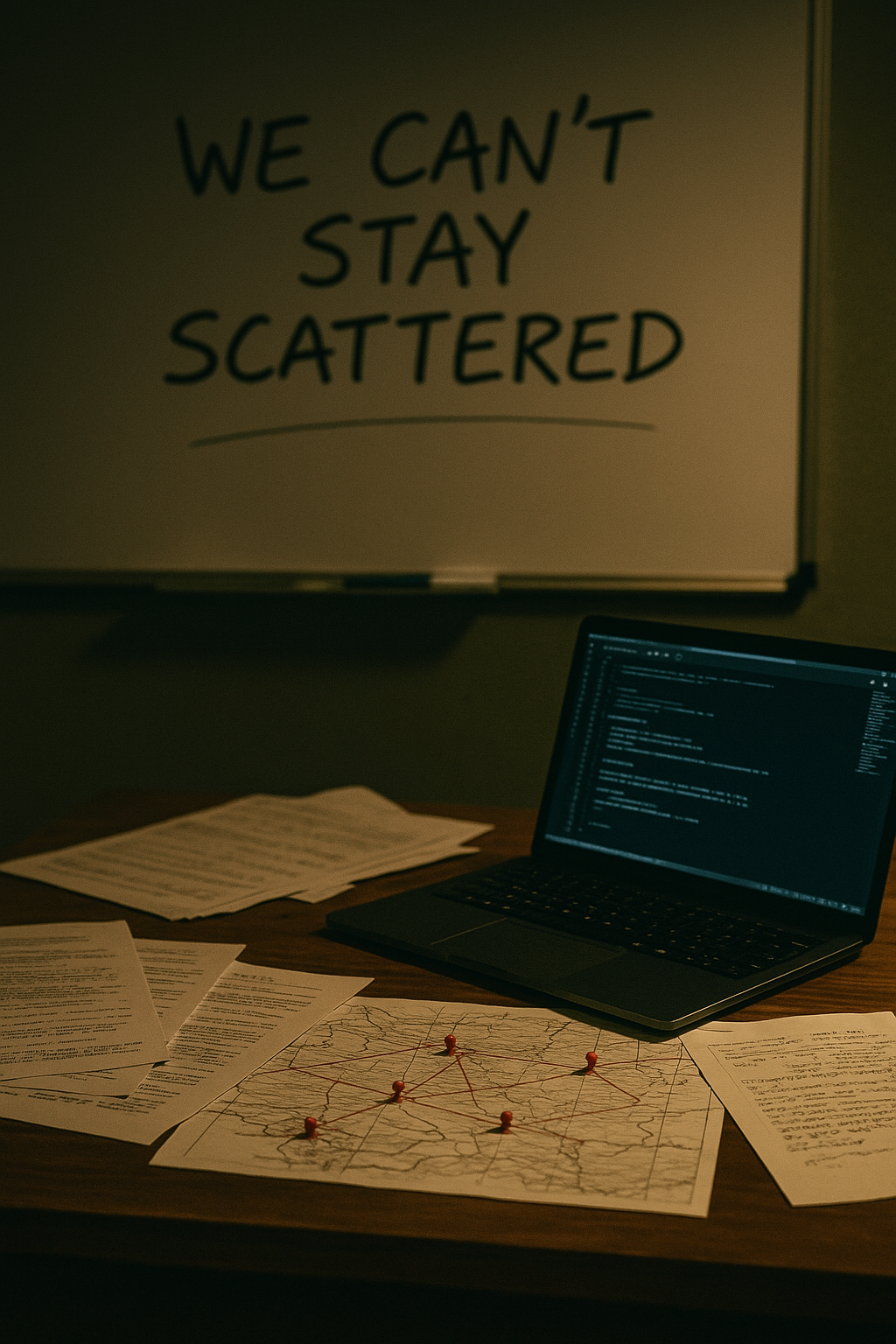
My desk looks like a crime board: a paper map with threads, USB sticks labeled in pencil, a laptop choked with offline archives. The picture won’t tidy itself, but it doesn’t need to—clarity doesn’t require neatness.
I’ve cataloged a pattern: encrypted whispers in abandoned repos; HELP carved into comments; a conference erased so cleanly it left no crater; a single radio burst spelling a single word. Alone, each is noise. Together, they’re a sentence.
If I keep collecting as a party of one, I become the next data point—an absence where a person used to be. The watchers don’t miss forever. The only counter is convergence: pool knowledge, cross‑validate, act in ways that don’t depend on a single point of failure.
The question isn’t if we resist. It’s how soon we start acting like we already are.